Bacteria Experimental Protocols: Cultivation and Analysis
Introduction
Bacteria, as single-celled prokaryotic microorganisms, represent a cornerstone of research in molecular biology, biotechnology, medicine, and environmental science. Their rapid reproduction, genetic tractability, and metabolic versatility enable precise experimental manipulation, yielding insights into fundamental biological processes and practical applications. Proper cultivation and analysis protocols are critical to ensure reproducibility, minimize contamination, and maintain biosafety. This overview synthesizes standard procedures for bacterial handling, emphasizing their role in advancing scientific inquiry and technological innovation.
:max_bytes(150000):strip_icc()/bacteria_cell_drawing-5786db0a5f9b5831b54f017c.jpg "Prokaryotic Cells")
Biological Background
Bacteria display extensive diversity in morphology (e.g., cocci, bacilli, spirilla), metabolism (e.g., autotrophic, heterotrophic), and adaptation to extreme environments (e.g., thermophiles, halophiles). As model organisms, species like Escherichia coli facilitate studies in gene regulation, protein synthesis, and evolutionary biology. In biotechnology, bacteria function as vectors for recombinant DNA, enabling gene cloning and expression. They are integral to synthetic biology for circuit design and to microbiome research for understanding host-microbe interactions. In infectious disease studies, pathogenic bacteria elucidate virulence mechanisms and antibiotic resistance.
Bacterial Culture and Growth
Culture Types
Liquid cultures, or broths, support homogeneous growth for high biomass yields and facilitate biochemical assays. Solid media, such as agar plates, allow spatial separation for isolating pure colonies and observing phenotypes like pigmentation or hemolysis.
Growth Conditions
Optimal growth requires tailored parameters: mesophilic bacteria thrive at 20–37°C, while psychrophiles or thermophiles demand lower or higher temperatures, respectively. Oxygen availability dictates aerobic (e.g., shaking incubators), anaerobic (e.g., gas packs), or facultative setups. pH (typically 6.5–7.5) and nutrients (e.g., carbon sources, vitamins) must be species-specific to avoid stress responses.
inoculation Techniques
Streak plating isolates individual colonies through serial dilution on agar. Liquid inoculation scales up biomass via starter cultures. Serial dilution quantifies viable cells via viable count methods.
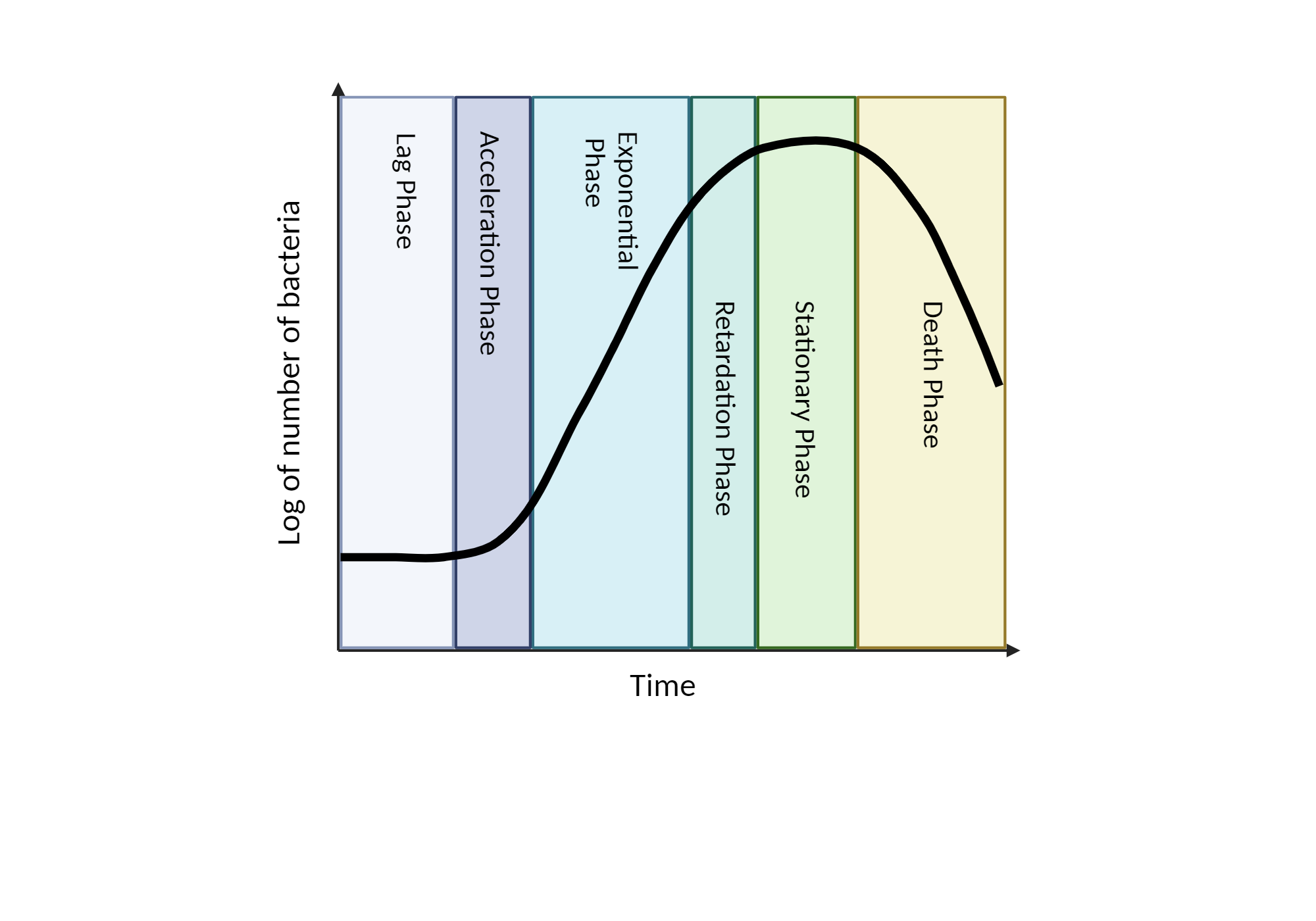
Bacterial growth follows phases: lag (adaptation), exponential (rapid division), stationary (nutrient limitation), and death (toxin accumulation).